

The Basic Steps of Exchanging Business Cards (Meishi)
Business card exchange in Japan — meishi koukan (名刺交換) — is a small, precise ritual most foreign professionals underestimate. Getting it right doesn't just avoid embarrassment; it signals that you take the relationship seriously before a single word of business has been discussed. The core sequence:
- Stand up if you're seated.
- The visitor (or the lower-ranking person, in a mixed situation) offers their card first.
- Present your card with both hands, text facing the recipient, held at chest height.
- Say your company name and your own name clearly as you offer it — "[Company], [Name] to moushimasu" (〜と申します) is the standard, polite phrasing.
- Receive the other person's card with both hands, and give a slight bow.
- Do not put the card away immediately — see the section on handling it during the meeting below.
When to Exchange Cards at a First Meeting
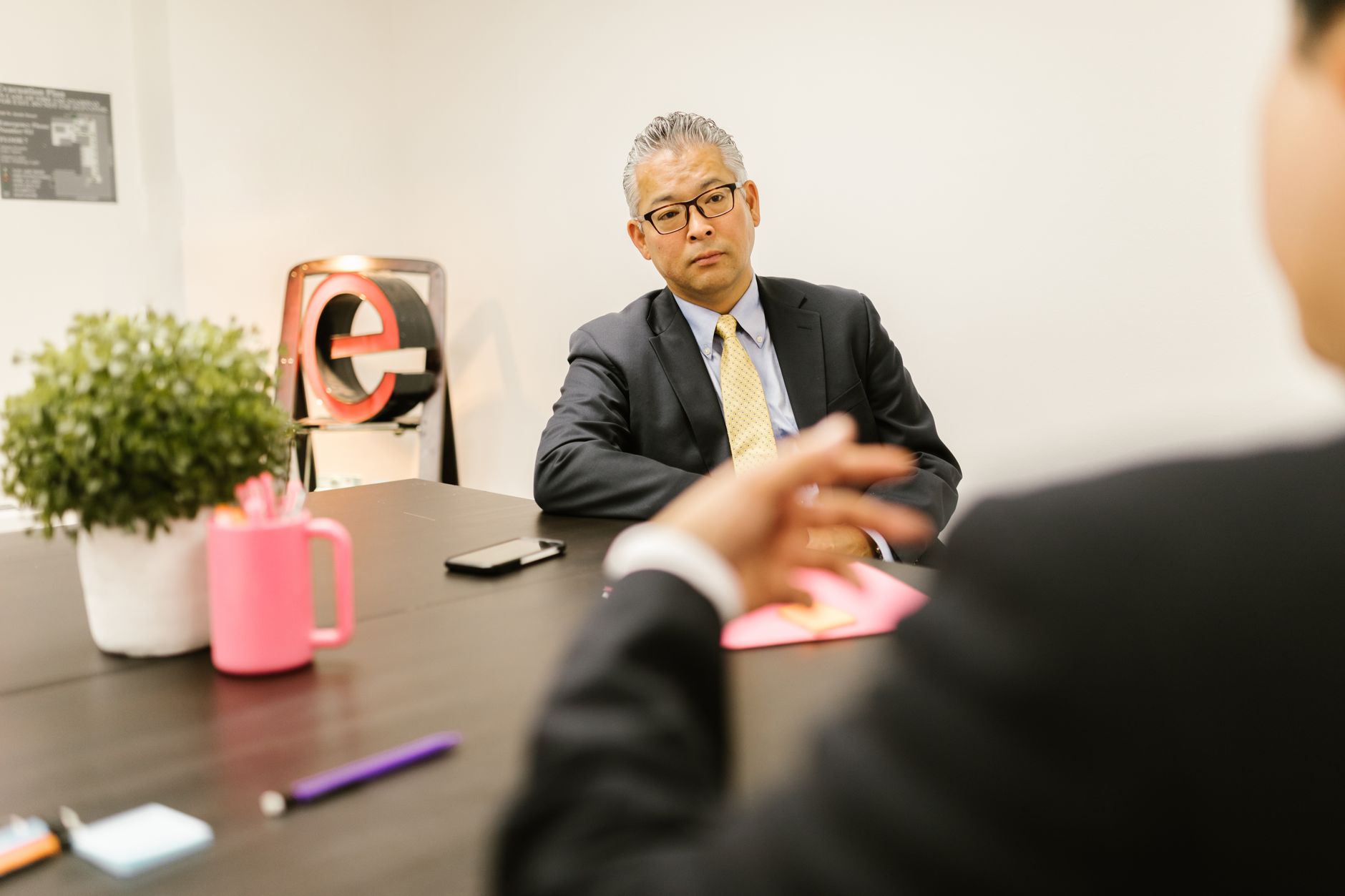
Cards are exchanged at the very start of a first meeting, before sitting down for the actual discussion — typically right after entering the meeting room and greeting each other, and before coffee or tea is served. If you're meeting multiple people from the same company, cards are exchanged with each person individually, generally starting with the most senior person on the other side.
Posture and Positioning
Hold the card so the text faces the person receiving it — never hand over a card upside-down or sideways from their perspective. Present it slightly below your own chest height, angled upward toward the recipient, with a small bow of the head (not a deep bow — this isn't a formal greeting bow, just a respectful nod). Maintain a light smile and eye contact as you speak your name; looking down at the card itself while speaking reads as less confident.
Two Hands vs. One Hand
The default and safest approach is two hands for both giving and receiving — this is the form that reads as fully correct in any situation. In practice, if you are simultaneously receiving a card with one hand while extending your own with the other (common when cards are exchanged almost simultaneously between two people), that's normal and accepted; it's specifically handing over or receiving a card carelessly with one hand when both hands were free that reads as casual or rushed.

What to Do With the Card After Receiving It
This is the step foreign visitors most often get wrong — not the exchange itself, but what happens in the ten minutes afterward:
- Do not immediately put the card in your pocket or wallet. This is read as dismissive, as if the person themselves has just been put away.
- Place it on the table in front of you, on top of (or beside) your business card holder, for the duration of the meeting — this is the standard, expected behavior, not an optional nicety.
- If multiple people are in the meeting, arrange their cards on the table in the same seating order as the people themselves, so you can glance down and confirm names/titles without staring at someone while trying to remember who they are.
- Only put cards away after the meeting ends, ideally into a proper business card case rather than a wallet or pocket.
Where to Place Cards During the Meeting
Building on the point above: arrange received cards on the table, roughly matching the physical seating arrangement of the people across from you. If you receive a card from the most senior person present, it's common (though not strictly mandatory) to keep that card slightly more prominent — for example, on top of your card holder rather than beside it — for the duration of the meeting.
Confirming Names and Titles
Japanese business cards typically list the person's title prominently, and titles carry real functional weight (who has decision authority, who you should follow up with). If a name's pronunciation isn't obvious from the kanji (which is common — many Japanese names have multiple possible readings), it's entirely acceptable to politely ask, "Onamae wa nan to oyomi shimasu ka?" (お名前は何とお読みしますか — "How do I read your name?"). Getting this right matters more than avoiding the question.
Exchanging Cards With Multiple People
When meeting a group, exchange cards with each person individually rather than handing out cards in a batch. Start with the most senior person if seating position or introductions make hierarchy clear; if it isn't clear, following the order in which people introduce themselves is a safe default. Keep every card you receive on the table for the whole meeting, organized by seat, as described above.
Business Card Design for Foreign Companies Operating in Japan
If you're a foreign company or a foreign employee based in Japan, your card design itself sends a signal. A few practical points:
- Bilingual cards work well — Japanese on one side, your home-market language (often English) on the other, rather than cramming both onto a single side.
- Include your title clearly, even if your home-market culture is less title-conscious — Japanese business contacts will look for it immediately.
- Avoid overly casual design choices (bright colors, informal fonts) for a card meant to be used with traditional Japanese business contacts — save the more creative design for a card used mainly with startup or creative-industry contacts.
Recommended Business Card Layout
A layout that reads as clean and professional to a Japanese business audience, and translates well between languages if you run a bilingual card:
Why Each Element Is Placed Where It Is
- Logo, top-left — the most conventional position, immediately recognizable.
- Name and title, prominent, upper-middle — title placement right under the name matters in Japan, since it's often the first thing a recipient checks.
- Company name, clearly separated below — given its own visual weight rather than being squeezed next to the logo.
- Contact block, grouped together below a dividing line — email, phone, and website kept together rather than scattered, since this is the section people actually return to later.
- QR code, bottom-right, optional — increasingly common for linking to a digital contact card (vCard) or company site; place it so it doesn't compete visually with the name/title block, which should remain the clear focal point.
Japanese vs. International Business Card Conventions
A few differences worth knowing if you're designing a card for use in Japan specifically:
- Title prominence — Japanese business cards give job titles more visual weight than is typical on many Western cards, where a name alone sometimes dominates.
- Company name weight — the company name is generally treated as equally or more important than the individual's name, consistent with the same "company-first" pattern seen throughout Japanese business etiquette.
- Vertical Japanese-side option — many companies operating seriously in the Japanese market print a fully vertical, Japanese-only layout on one side (rather than just translating a horizontal Western layout), which reads as more native and deliberate than a horizontal card with Japanese text simply substituted in.
Should You Add a QR Code?
A QR code linking to a digital business card (vCard) or your company website is now common and generally well received, especially with younger or more digitally-oriented contacts. It doesn't replace the physical card exchange ritual — the physical exchange itself remains the expected first step — but it's a useful addition for making sure your contact information actually gets used afterward, since a saved vCard on someone's phone survives long after a physical card gets buried in a drawer.
Placement of Contact Information
Keep your contact block grouped in one clear area (as shown in the layout diagram above) rather than scattered around the card. List, in order: email, phone, website — this is the order people generally reach for depending on urgency (email for most contact, phone for anything time-sensitive, website as a reference).
Common Mistakes
- Writing on someone's card in front of them. Never write notes on a business card you've just received while the person is still present — it reads as disrespectful. Note details privately afterward instead.
- Handing over a card with one hand when both were free. Default to two hands unless genuinely unable to.
- Putting a received card away immediately. Keep it visible on the table for the duration of the meeting.
- Running out of cards. Always carry more than you think you'll need — running out mid-meeting, especially with a senior contact, is a visible, awkward gap.
- A worn, bent, or damaged card case (or no case at all). A card pulled loose from a pocket looks careless; a proper card case is a small investment that consistently reads as more professional.
- Forgetting the verbal introduction. The exchange isn't just physical — stating your name and company as you present the card is part of the ritual, not optional small talk.
FAQ
Q: What if I run out of business cards during a meeting? A: Apologize briefly and sincerely, and offer to send your contact details by email immediately after the meeting. It's a minor lapse, not a serious one, as long as you handle it gracefully rather than ignoring it.
Q: Should I have my business card translated into Japanese even if my company doesn't operate in Japan long-term? A: If you expect more than an occasional meeting with Japanese business contacts, yes — a bilingual card (or at minimum, a Japanese-side card you can offer alongside your usual one) is a small effort that consistently improves how seriously you're taken in a first meeting.
Q: Is it rude to receive a card with one hand if I'm holding something else? A: It's understandable and won't cause serious offense, but set down what you're holding if at all possible — two hands remains the form that reads as fully correct, and doing your best to achieve it is noticed and appreciated even if not always perfectly possible.
Q: Do junior employees exchange cards differently than senior executives? A: The ritual itself (two hands, verbal introduction, careful handling afterward) is the same regardless of seniority. What changes is sequencing in group settings — the most senior person is generally addressed or exchanged with first when hierarchy is clear.


