

Introduction
Getting a Residence Card and completing address registration are two of the very first legal steps every foreign national must take when starting life in Japan — but they are two different procedures, run by two different government bodies, and confusing them is one of the most common mistakes new residents make. This guide walks through the full process as one connected flow: what a Residence Card actually proves, how it relates to your Status of Residence, where you receive it, how and when to register your address at your local municipal office, which related procedures (My Number, health insurance, pension) typically follow, how to find a municipal office with English-language support, and what to do if your situation doesn't fit the standard case.
By the end of this article you will understand: what a Residence Card is and how it differs from Resident Registration; where each procedure happens and who handles it (Immigration Services Agency vs. your municipal office); the realistic timeline and deadlines involved; what documents to prepare; how to find English-language support at your local ward or city office; and what your options are if you don't yet meet the standard requirements.
Residence Card vs. Resident Registration: Know the Difference
These two things are easy to conflate, but they are not the same, they are not issued by the same authority, and completing one does not automatically complete the other.
Residence Card (在留カード, Zairyu Card)
The Residence Card is issued by the Immigration Services Agency of Japan (ISA), under the Ministry of Justice. It is proof of your legal immigration status — your Status of Residence, its validity period, and (for most statuses) your work authorization. It is issued to mid- to long-term residents: foreign nationals granted a period of stay of more than 3 months.
Resident Registration (住民登録, Jūmin Tōroku)
Resident Registration is a completely separate procedure handled by your local municipal office (city, ward, or town office) under Japan's Basic Resident Registration system. It records where you actually live, and it is the basis for enrollment in local services such as National Health Insurance, National Pension, and the My Number system.
Residence Card ≠ Resident Registration. Receiving your Residence Card at the airport only confirms your immigration status — it does not register your address. You still need to visit the municipal office covering the area where you actually live and submit a moving-in notification, generally within 14 days, before your Resident Registration is complete.
Step 1 — Determine Your Status of Residence
Every mid- to long-term resident is granted a specific Status of Residence (also called a visa category), which defines what activities you are legally permitted to do in Japan — including whether, and how much, you can work. Common categories include Student, Engineer/Specialist in Humanities/International Services, Business Manager, Highly Skilled Professional, Dependent, Spouse or Child of Japanese National, Permanent Resident, Long-Term Resident, Designated Activities, and Temporary Visitor (short-term, non-resident). Your Status of Residence is printed on your Residence Card and is the single most important factor in almost everything else described in this article, so confirm it before proceeding. See the comparison table below for a summary of common categories.
Step 2 — Enter Japan and Receive Your Residence Card
If you are entering Japan for a stay of more than 3 months and you land at one of the major international airports designated for on-the-spot issuance — Narita, Haneda, Chubu (Nagoya), Kansai, New Chitose, Hiroshima, or Fukuoka — your Residence Card is issued directly at the port of entry when your landing permission is granted. If you enter Japan through a different airport or seaport, a landing permission label is affixed to your passport instead, and your Residence Card is mailed to you later, after you complete your address registration.
Keep your Residence Card with you at all times once issued — you are required to carry it, and you will need it for the address registration step below.
Step 3 — Find a Place to Live
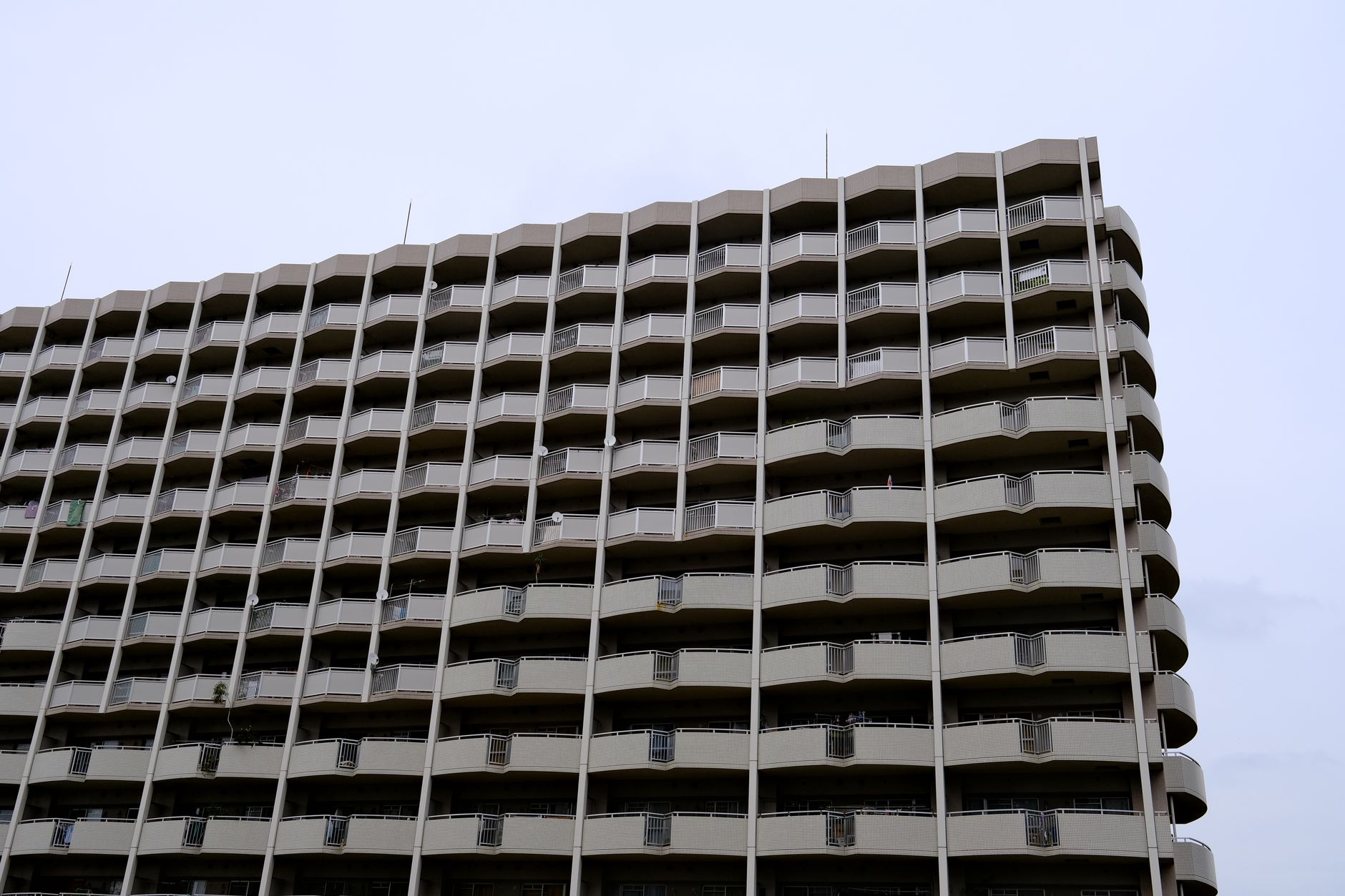
Before you can register an address, you need a fixed place to live — generally understood by municipal offices as an address you intend to occupy for a meaningful period (commonly cited as three months or more), such as a rented apartment, a company dormitory, or a share house room. A hotel, short-stay guesthouse, or similar temporary accommodation generally cannot be used as your registered address, because it does not meet this "fixed dwelling" requirement. If your housing situation is temporary or unclear when you first arrive, see the "What If I Don't Meet the Requirements?" section below.
Housing options range from studio apartments to larger family units, and in central Tokyo often include modern tower condominiums as well as smaller low-rise apartment buildings. Whichever you choose, make sure the landlord or management company can provide the documentation (typically a lease agreement) that your municipal office will ask to see or reference when you register.
Step 4 — Register Your Address at the Municipal Office
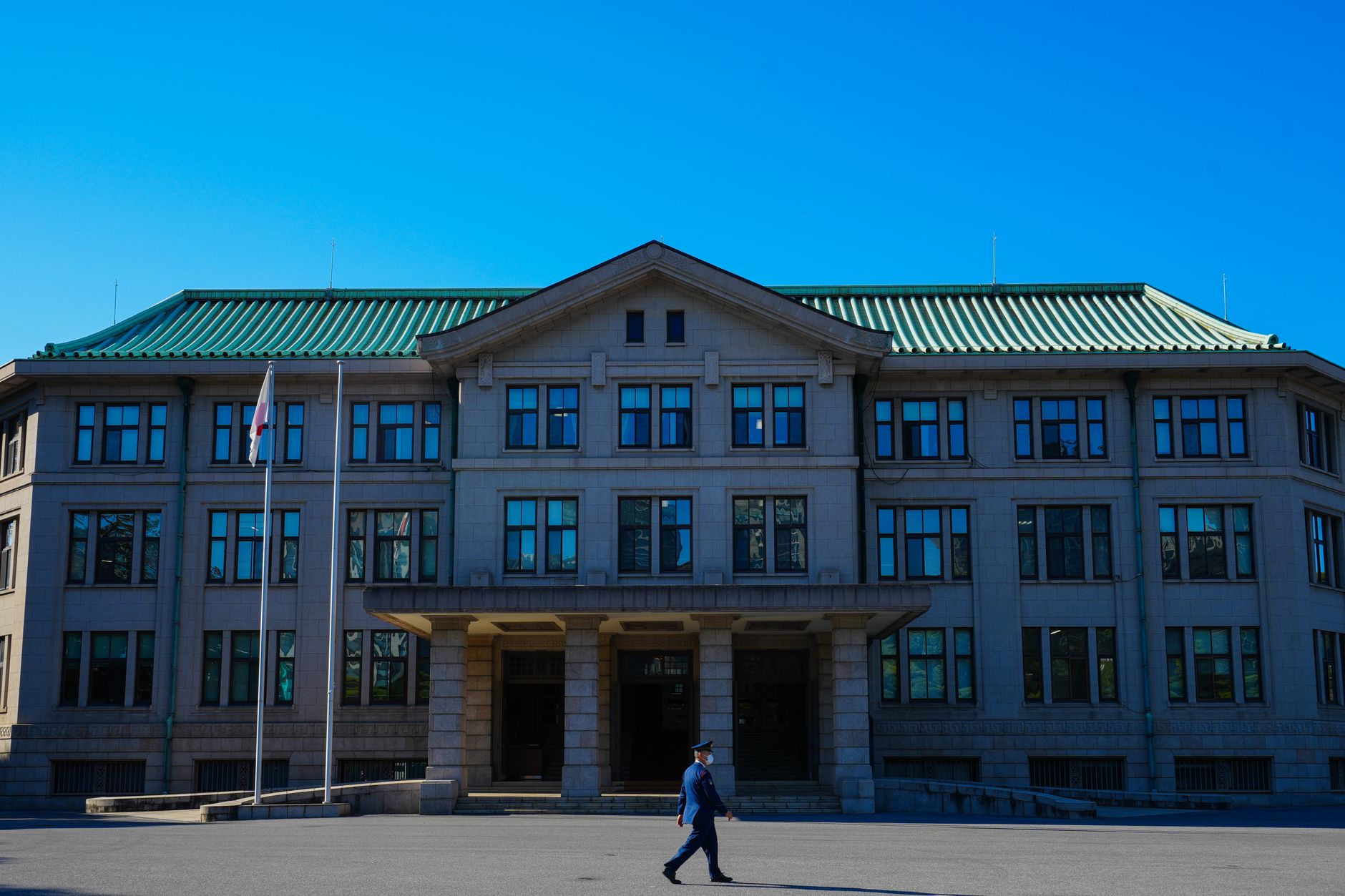
Once you have moved into your address, you must submit a moving-in notification at the municipal office (city hall, ward office, or town/village office) covering the area where you now live — generally within 14 days of moving in. This is the step that actually creates your Resident Registration record. Bring:
- Your passport
- Your Residence Card (if already issued)
- Documentation of your address (such as a lease agreement), if requested
If you have not yet received your Residence Card because you entered through an airport without on-the-spot issuance, submitting this notification is also the trigger for your card to be mailed to that address. Missing the 14-day window does not mean your situation is unsolvable, but it can carry a fine (Japanese municipal ordinances commonly cite penalties of up to ¥50,000 for failing to notify) and may complicate later immigration procedures such as extensions of stay — so if you think you will miss the deadline, visit the municipal office as soon as you can and explain your situation rather than waiting.
If you later move to a different address within the same city or ward, you file an address-change notification at the same office. If you move to a different municipality entirely, you must file a moving-out notification at your old municipal office and a moving-in notification at your new one, again generally within 14 days of the move.
Step 5 — Complete Related Municipal Procedures
Once your address is registered, several related procedures commonly follow — but exactly which ones apply depends on your Status of Residence, your length of stay, and your personal situation, so treat this as a checklist to confirm at the counter rather than a universal requirement:
- My Number: A My Number card is generally issued to registered residents and is increasingly used as the basis for other administrative services, including health insurance records.
- National Health Insurance (NHI): Residents staying more than 3 months who are not already covered by an employer's health insurance (Shakai Hoken) are generally required to enroll in NHI at the municipal office.
- National Pension: Residents between 20 and 60 years old are generally required to enroll in and contribute to the National Pension system, again unless already covered through an employer's pension scheme.
- Other procedures: depending on your situation, this can include registering a personal seal (hanko), enrolling children in local schools, or municipal tax registration.
Ask the counter staff which of these apply to you when you register your address — many municipal offices will guide you through the relevant ones in the same visit.
Where Do I Submit the Forms?
A common point of confusion is assuming every procedure happens "at city hall." In fact, immigration matters and address/resident matters are handled by two separate government bodies, at two different types of office.
Immigration-Related Procedures
Matters concerning your Status of Residence itself — such as a Change of Status of Residence, an Extension of Period of Stay, a Permission to Engage in Activity Outside Your Status, or a replacement for a lost Residence Card — are handled by the Regional Immigration Services Bureau covering your area, not by your municipal office.
Address Registration and Related Municipal Procedures
Address registration, National Health Insurance, National Pension enrollment, and My Number are handled by your local municipal office (city hall, ward office, or town/village office) — specifically, the one covering the area where you actually live, not any office of your choosing.
Residence Status Comparison Table
The table below summarizes commonly encountered Statuses of Residence. Work authorization rules have important exceptions in every category — always confirm your own card's specific conditions rather than relying on the general case.
| Status of Residence | Typical Purpose | Work Authorization | Typical Requirements / Notes |
|---|---|---|---|
| Student | Attending a Japanese school, university, or language school | Not authorized by default; part-time work up to 28 hours/week possible with separate permission | Enrollment at a recognized institution; permission for part-time work applied for separately |
| Engineer / Specialist in Humanities / International Services | Technical, administrative, or specialist office work | Authorized, within the scope of the specific role and employer | Relevant degree or work experience; employment contract; Certificate of Eligibility generally required |
| Business Manager | Managing or launching a company in Japan | Authorized, for the management activity itself | A dedicated, physical business office; capital and operational requirements apply |
| Highly Skilled Professional | High-level research, technical, or business management roles | Authorized | Points-based system; preferential immigration treatment for family and permanent residence eligibility |
| Dependent | Spouse or child of a Status of Residence holder above | Not authorized by default; part-time work up to 28 hours/week possible with separate permission | Proof of family relationship with the sponsoring resident |
| Spouse or Child of Japanese National | Family members of a Japanese citizen | Generally unrestricted | Proof of the family relationship (marriage or birth certificate) |
| Permanent Resident | Long-term settled residents | Unrestricted | Typically requires a long qualifying period of prior residence and ISA approval |
| Long-Term Resident | Various humanitarian, family, or special circumstances | Generally unrestricted | Conditions vary considerably by individual case |
| Designated Activities | Specific activities individually designated by the Minister of Justice | Depends entirely on the individually designated conditions | Scope of permitted activity is stated in your individual authorization — confirm your own conditions |
| Temporary Visitor | Tourism or short business trips (short-term stay) | Not authorized | Not a mid- to long-term resident status; no Residence Card is issued |
Work authorization descriptions above are general summaries. Exact conditions are set out on each individual's Residence Card and Certificate of Eligibility; where your situation is unclear, confirm directly with the Immigration Services Agency or a licensed immigration professional (Gyoseishoshi).
What Do I Need? Requirements Overview
Exactly which documents you need depends on the specific procedure, your municipal office, and your Status of Residence — the following is a general starting point, not a universal checklist:
- Passport — required at nearly every step
- Residence Card — required for address registration once issued
- Proof of address — typically a lease agreement or equivalent, if requested
- Documents proving family relationship — for Dependent or family-based statuses (marriage certificate, birth certificate)
- Japanese translations — some municipal offices require certified Japanese translations of foreign-language documents such as marriage or birth certificates
- Status-specific documents — e.g. a Certificate of Eligibility, employment contract, or enrollment certificate, depending on your category
Not every item applies to every person. Confirm the exact list with your specific municipal office or the Regional Immigration Services Bureau before your visit, especially if your situation involves family members or a non-standard status.
What If I Don't Meet the Requirements?
If Your Current Status Doesn't Allow Your Intended Work
Every Status of Residence has a defined scope of permitted activity. If you want to do something outside that scope — for example, take on part-time work while on a Student or Dependent status — you generally need a separate Permission to Engage in Activity Outside Your Status of Residence from the Immigration Services Agency before starting that activity. This permission is not a new status; it is an add-on to your existing one, and it typically caps part-time work at 28 hours per week across all employers combined. If your intended work is a fundamental change (for example, moving from Student to full-time employment), you generally need to apply for a full Change of Status of Residence instead.
If You Cannot Register an Address Yet
If you are staying in a hotel, guesthouse, or other temporary accommodation and have not yet secured a fixed address, you generally cannot complete Resident Registration until you do. Some municipal offices provide guidance for people in this situation (for example, those staying with a host or sponsor at a fixed address they can register temporarily) — contact the relevant municipal office directly and explain your circumstances rather than assuming a single universal rule applies.
If Your Documents Are Incomplete
Do not guess which substitute document might be accepted. Municipal office and immigration office requirements vary by case, and presenting the wrong substitute can cause delays. Ask the counter staff directly what alternative is acceptable, or call ahead before your visit.
Municipal Offices With English Support
This is not a ranking — it is a short reference list of offices in central Tokyo with verified, publicly listed English-language support, to give you a starting point for finding help near you. Availability, hours, and contact details can change, so confirm directly with the office before visiting.
| Municipality | Office / Service | Address | English Support | Official Page |
|---|---|---|---|---|
| Shinjuku City | Shinjuku City Office — Foreign Resident Advisory Corner (1F) | 1-4-1 Kabukicho, Shinjuku-ku, Tokyo 160-8484 | In-person and phone advisory counter (03-5272-5060); separate Foreign Residents Support Center (FRESC) nearby covers visa and employment consultations | foreign.city.shinjuku.lg.jp |
| Minato City | Minato City Office — Multilingual Consultation Service | 1-5-25 Shibakoen, Minato-ku, Tokyo 105-8511 | Walk-in/phone consultation in English, Chinese, Korean, Portuguese, Spanish, Thai, Russian, Tagalog, Nepali, Vietnamese, Indonesian, Hindi, French (03-3578-2046 / 2524) | city.minato.tokyo.jp |
| Shibuya City | Shibuya City Office — English Interpreting Desk (Cultural Promotion Division, 7F) | 1-1 Udagawacho, Shibuya-ku, Tokyo | English interpreting available weekdays 9:00–17:00; extended-hours Residents Services Center also available | city.shibuya.tokyo.jp |
"English support" above generally means administrative counter assistance or interpretation, not full translation of legal or immigration documents into English. Confirm the exact scope of support with the office before your visit.
Important: Register at the Office Covering Where You Actually Live
You do not get to choose which municipal office to register with based on which one offers the best English support. As a basic rule, you must complete address registration at the municipal office covering the area where you actually, physically live — not a neighboring ward, and not one you simply find more convenient. Some municipalities do use branch offices or regional service centers for specific procedures, so if you're unsure which counter to use within a large city, check the municipality's official website or call ahead before visiting.
Residence Registration Checklist
Before visiting your municipal office to register your address, confirm:
- ☐ Passport (required)
- ☐ Residence Card, if already issued (required)
- ☐ Confirmed Japanese address / lease agreement (required)
- ☐ Family relationship documents, if registering with a Dependent or family member (situational)
- ☐ Certified Japanese translations of foreign documents, if required by your office (situational)
- ☐ Any status-specific documents (Certificate of Eligibility, enrollment certificate, etc.) (situational)
- ☐ Checked the office's hours and whether an appointment is needed
- ☐ Checked whether English-language support is available, or arranged your own interpreter if not
FAQ
Q: Can I register my address at a hotel?
A: Generally, no. Municipal offices require a fixed dwelling you intend to occupy for a meaningful period; hotels and short-stay accommodation typically do not qualify. Contact your municipal office directly if your housing situation is unusual.
Q: Do I need to visit city hall within 14 days?
A: Yes — the standard rule is to submit your moving-in notification within 14 days of establishing your address. Missing this deadline can carry a fine and may complicate later immigration procedures, so visit as soon as possible if you think you'll be late.
Q: Can I register my address before receiving a Residence Card?
A: If you entered through an airport that doesn't issue cards on the spot, you complete your address registration first, and your Residence Card is mailed to that registered address afterward.
Q: Can I work with a Student status?
A: Not by default. Student status does not include work authorization; you need separate permission to engage in part-time work, generally capped at 28 hours per week.
Q: Can Dependents work in Japan?
A: Not by default. Like Student status, Dependent status requires separate permission for part-time work, generally capped at 28 hours per week across all employers.
Q: Where do I change my address after moving?
A: File the notification at your municipal office — an address-change notification if moving within the same city/ward, or a moving-out notification at your old office plus a moving-in notification at your new one if moving between municipalities.
Q: What if I don't speak Japanese?
A: Check whether your municipal office offers English support (see the table above), bring a Japanese-speaking friend or colleague, or consider a professional interpreter for complex cases such as status changes.
Q: Which city hall provides English support?
A: Several central Tokyo offices do, including Shinjuku, Minato, and Shibuya, each with different formats (advisory counters, multilingual phone lines, or interpreting desks) — see the comparison table above. Availability varies by municipality, so check your own local office as well.
Q: Can I register an address in any city hall?
A: No. You must register at the municipal office covering the area where you actually live, not any office of your choosing.
Q: What happens if I miss the deadline?
A: You may face a fine (commonly cited as up to ¥50,000 under Japanese municipal ordinances) and possible complications with future immigration procedures. If you realize you're going to miss it, visit your municipal office as soon as possible and explain your situation rather than waiting.
Have a question about this article?
If anything here doesn't match your specific situation, we're happy to help point you toward the right resource.
Ask Us About This ArticleSources and Further Reading
This article draws on official guidance from the following primary sources. Procedures and requirements can change, so always confirm current details directly with the relevant authority before acting:
- Immigration Services Agency of Japan (ISA) — Status of Residence, Residence Card, and related immigration procedures
- Shinjuku City official foreign-resident information
- Minato City official Living Guide (consultation services)
- Shibuya City official resident information
Planning your move to Japan?
GMS can help you think through the practical side of relocating for business or work in Japan. This is general information, not legal or immigration advice.
Ask GMS About Moving to Japan

