

When you plan a trip to Osaka, one of the first real decisions is where to base yourself — and if you are coming from Tokyo, that decision starts the moment the Shinkansen pulls into Shin-Osaka. The three areas that come up again and again are Namba, Umeda (the district around Osaka Station), and Shin-Osaka. All three sit on the same subway line, minutes apart, but they suit very different trips.
This guide covers how to get from Tokyo to Osaka, which station to get off at, what each area is actually like to stay in, and which hotels suit which kind of traveller — so you can make the call in one sitting.
A note on the numbers below. Fares, journey times and rates were checked in September 2026. JR revised a range of fares on 14 March 2026, and hotel rates move constantly. Always confirm on the railway operator's or the hotel's own site before you book.
Namba vs Umeda vs Shin-Osaka: The Quick Answer
| If this sounds like your trip… | Base yourself in | The one-line reason |
|---|---|---|
| Dotonbori, street food, arcades and late nights | Namba | You can walk to most of what you came for |
| Department stores, coffee, day trips to Kyoto, Nara and Kobe | Umeda / Osaka Station | It is the JR hub, so regional trains start at your door |
| One or two nights between Shinkansen rides | Shin-Osaka | You sleep beside the platform you leave from |
The short version: most first-time visitors should stay in Namba or Umeda, not Shin-Osaka. Shin-Osaka is a transfer station with hotels attached, not a neighbourhood — it earns its place when your schedule, not your sightseeing, is the constraint.
Tokyo to Osaka: How to Get There
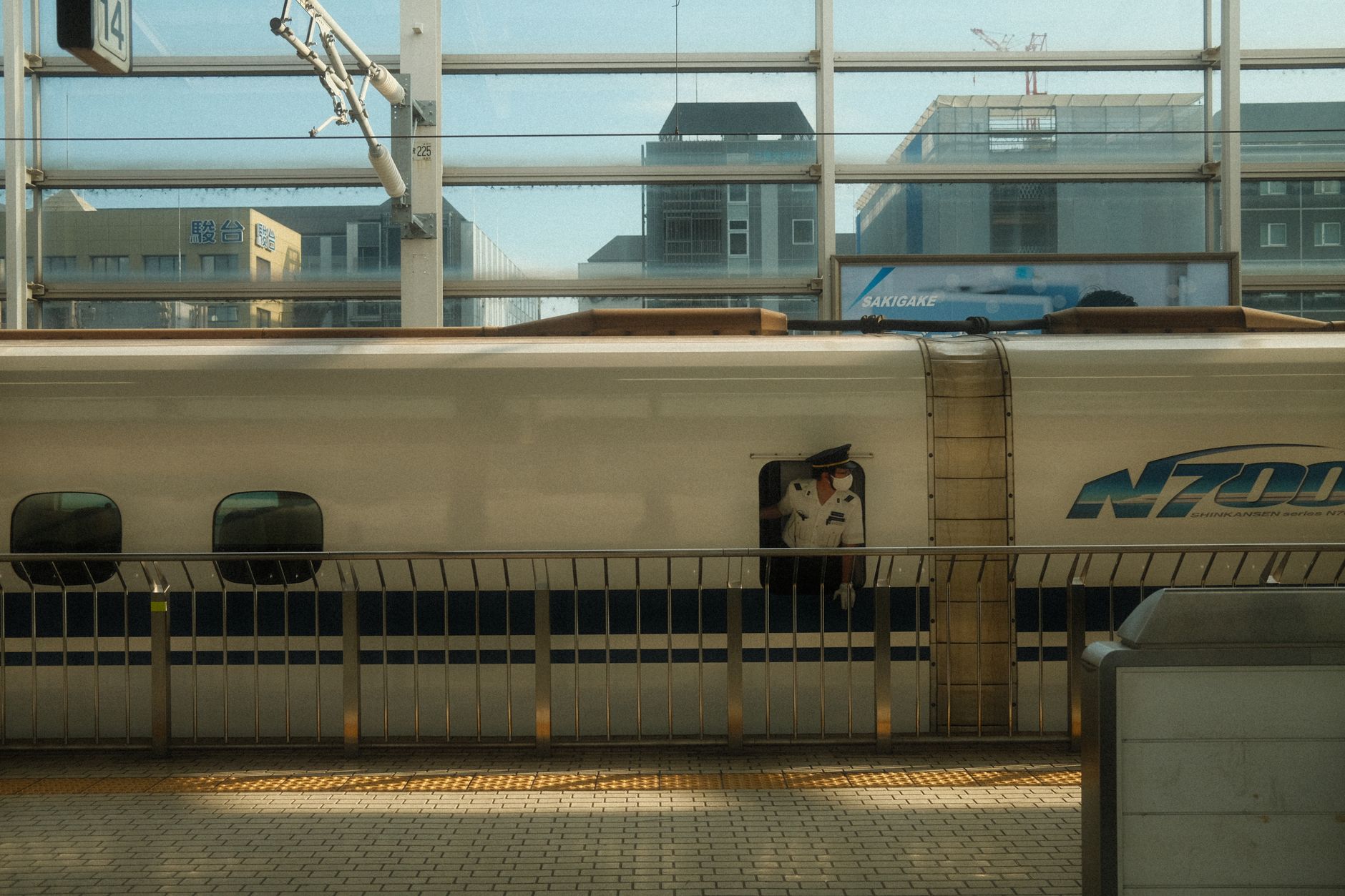
Riding the Tokaido Shinkansen from Tokyo
Nearly every visitor travelling overland from Tokyo arrives on the Tokaido Shinkansen, and nearly every one of those trains terminates at Shin-Osaka — not at Osaka Station, and not at Namba. That single fact drives everything below: wherever you are staying, your Osaka trip begins with a transfer at Shin-Osaka.
There are three service levels on the line. Nozomi is the fastest, stopping only at Shinagawa, Shin-Yokohama, Nagoya and Kyoto between Tokyo and Shin-Osaka. Hikari makes a few more stops, and Kodama stops everywhere. For a Tokyo–Osaka run, Nozomi is almost always the right choice unless you are travelling on a Japan Rail Pass.
Tokyo → Shin-Osaka → Umeda → Namba at a glance
Tokyo to Osaka at a glance
Tokyo Station
Where the Tokaido Shinkansen starts.
Tokaido Shinkansen · Nozomi
- from 2 h 21 min
- 515.4 km of track
- 552.6 km fare distance
- ¥13,870 non-reserved
- ¥14,720 reserved
Shin-Osaka
Every Tokaido Shinkansen from Tokyo terminates here.
Only Shinkansen stop in OsakaUmeda / Osaka Station
JR Kyoto Line
- ~4 min
- ~3.8 km
- ~¥170
or Osaka Metro Midosuji Line
- ~6–8 min
- ¥240
Namba
Osaka Metro Midosuji Line · direct
- ~16 min
- ¥290
- no change of train
Namba is not a Shinkansen station — and neither is Osaka Station. Arriving from Tokyo you always change at Shin-Osaka: onto the Midosuji Line for a single ride to Namba, or one JR stop north-west for Umeda.
| Leg | How | Typical time | Distance | Approximate fare (one way) |
|---|---|---|---|---|
| Tokyo → Shin-Osaka | Tokaido Shinkansen (Nozomi) | from 2 h 21 min | 515.4 km of track | ¥13,870 non-reserved · ¥14,720 reserved · ~¥20,450 Green Car |
| Shin-Osaka → Osaka (Umeda) | JR Kyoto Line | ~4 min | ~3.8 km | ~¥170 |
| Shin-Osaka → Umeda | Osaka Metro Midosuji Line | ~6–8 min | — | ¥240 |
| Umeda → Namba | Osaka Metro Midosuji Line | ~9 min | — | ¥240 |
| Shin-Osaka → Namba | Osaka Metro Midosuji Line (direct, no change) | ~16 min | — | ¥290 |
About that distance figure. Two numbers circulate for the Tokaido Shinkansen and they mean different things. 515.4 km is the physical length of the Shinkansen track between Tokyo and Shin-Osaka. 552.6 km is the operating distance — the older conventional-line distance that JR still uses to calculate fares. Your ticket price is worked out from the 552.6 km figure even though the train only travels 515.4 km. Neither number is a road distance, and neither is what a car navigation app will show you.
Where should you actually get off?
Shin-Osaka is the end of the Shinkansen line, so you will pass through it no matter what. The question is whether you stop there.
- Staying in Umeda? Take the JR Kyoto Line one stop to Osaka Station (~4 minutes), or the Midosuji Line to Umeda. Both drop you inside the hotel cluster.
- Staying in Namba? Stay on the Midosuji Line all the way through — it is a single ~16-minute ride with no change, which is the easiest transfer in the city with luggage.
- Staying in Shin-Osaka? Walk. Several hotels are inside or directly attached to the station building.
If you are arriving by air instead, note that Kansai International Airport connects most directly to Namba, not to Shin-Osaka, via the Nankai Line — another point in Namba's favour if you are flying in and taking the Shinkansen out.
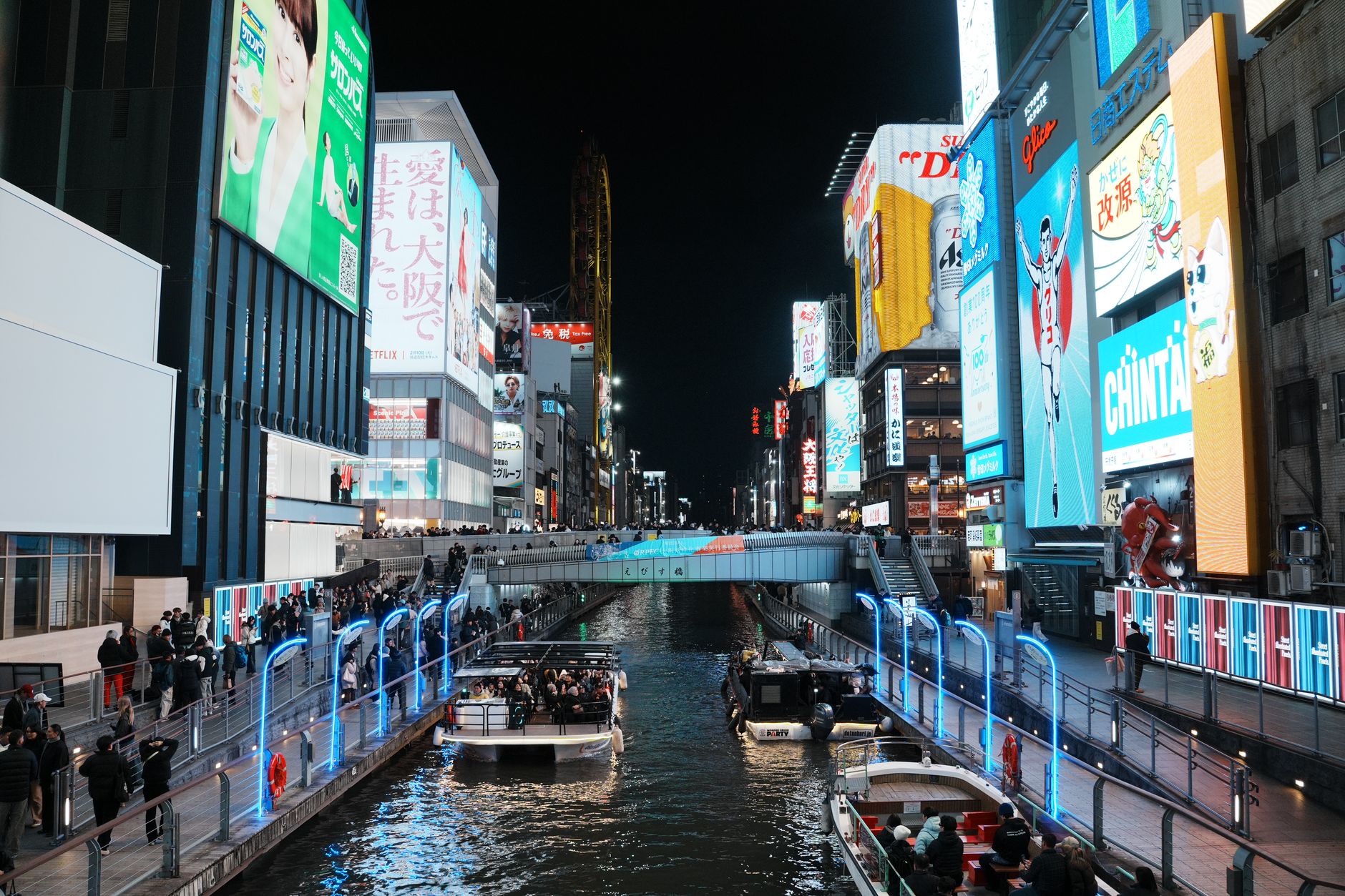
Namba: Dotonbori and Osaka's Nightlife Core
Namba is the Osaka most people picture: neon reflected in the canal, the Glico running man, and streets that stay busy long after Tokyo has gone quiet. It is the best base if your trip is about eating, walking and atmosphere.
The famous Dotonbori strip is here, along with the Shinsaibashi shopping arcade running north from it and Kuromon Ichiba Market a few minutes east, where the stalls sell sea urchin, scallops and wagyu skewers to eat standing up. Namba Parks, a shopping complex with a terraced rooftop garden, sits directly above Nankai Namba Station.
Transport is Namba's quiet strength. The Nankai Line runs straight to Kansai International Airport, the Midosuji Line connects north to Umeda and Shin-Osaka, and the Kintetsu and Hanshin networks reach Nara and Kobe. One caveat worth knowing before you book: "Namba" is really several adjoining stations — JR Namba, Nankai Namba and the Osaka Metro Namba — spread over a few hundred metres. Check which one your hotel is actually near.
Best for: first-time visitors, food-led trips, travellers who want to walk home after dinner, anyone flying in or out of Kansai.
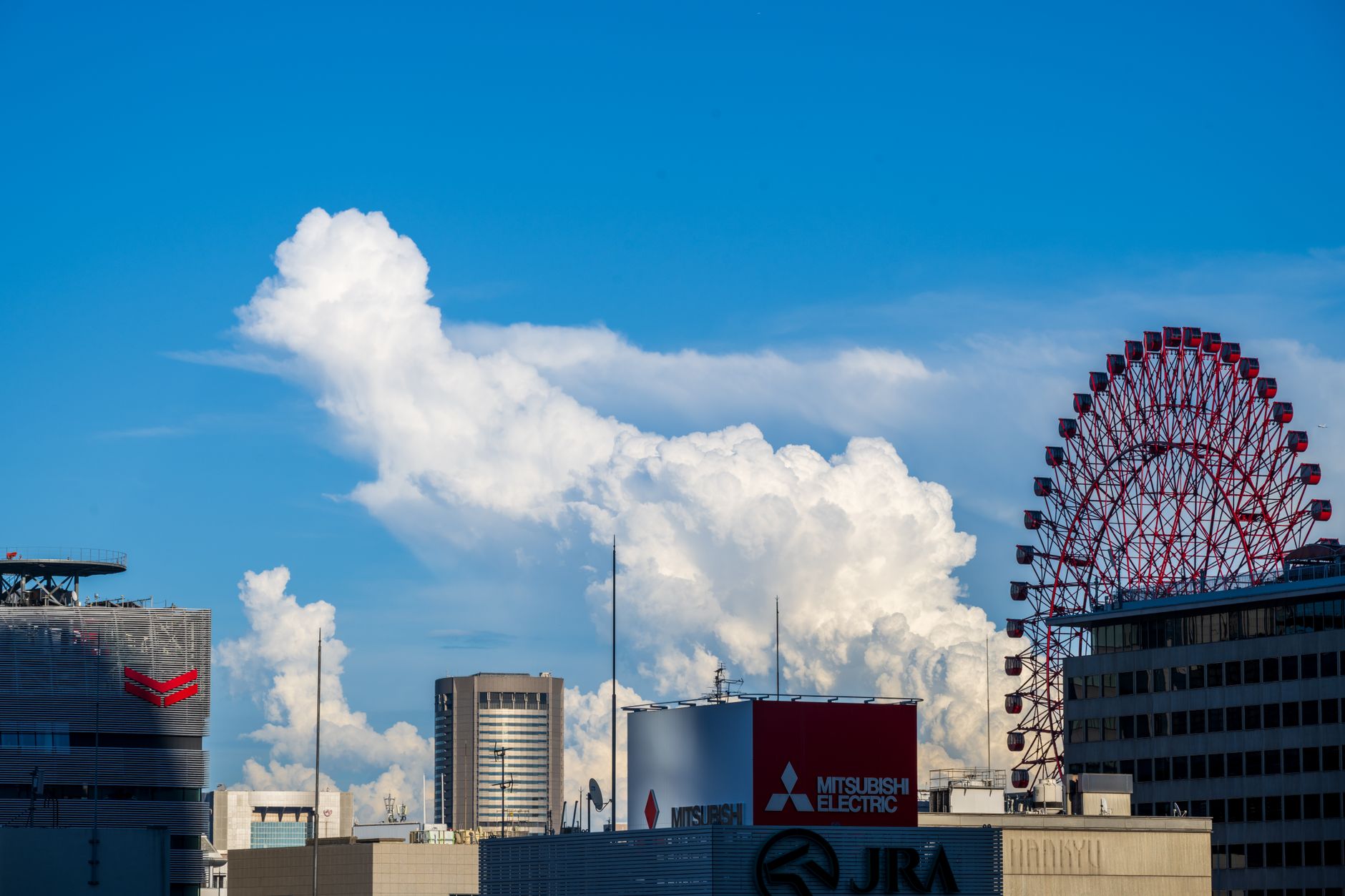
Umeda and Osaka Station: The Northern Hub
Umeda is Osaka's other centre, and its transport spine. Osaka Station and the private-railway terminals at Osaka-Umeda sit on top of each other here, which makes this the natural base if your trip includes day trips — Kyoto, Nara, Kobe and Himeji are all straightforward from this one point.
Above ground it is a district of towers, department stores and basement food halls. Grand Front Osaka and Osaka Station City are shopping and dining complexes built into the station itself; HEP Five has the red Ferris wheel visible across the skyline; the Umeda Sky Building and its open-air Floating Garden Observatory are a fifteen-minute walk north-west.
Umeda is more polished and less raucous than Namba. Some travellers read that as calmer and more comfortable; others find it short on street-level character. It also has a reputation for being genuinely hard to navigate underground — the linked basement concourses are extensive, and signage between the JR, Hankyu, Hanshin and Metro stations takes some getting used to.
Best for: repeat visitors, business travellers, trips built around Kansai day trips, anyone who wants a big-brand hotel with a station underneath it.
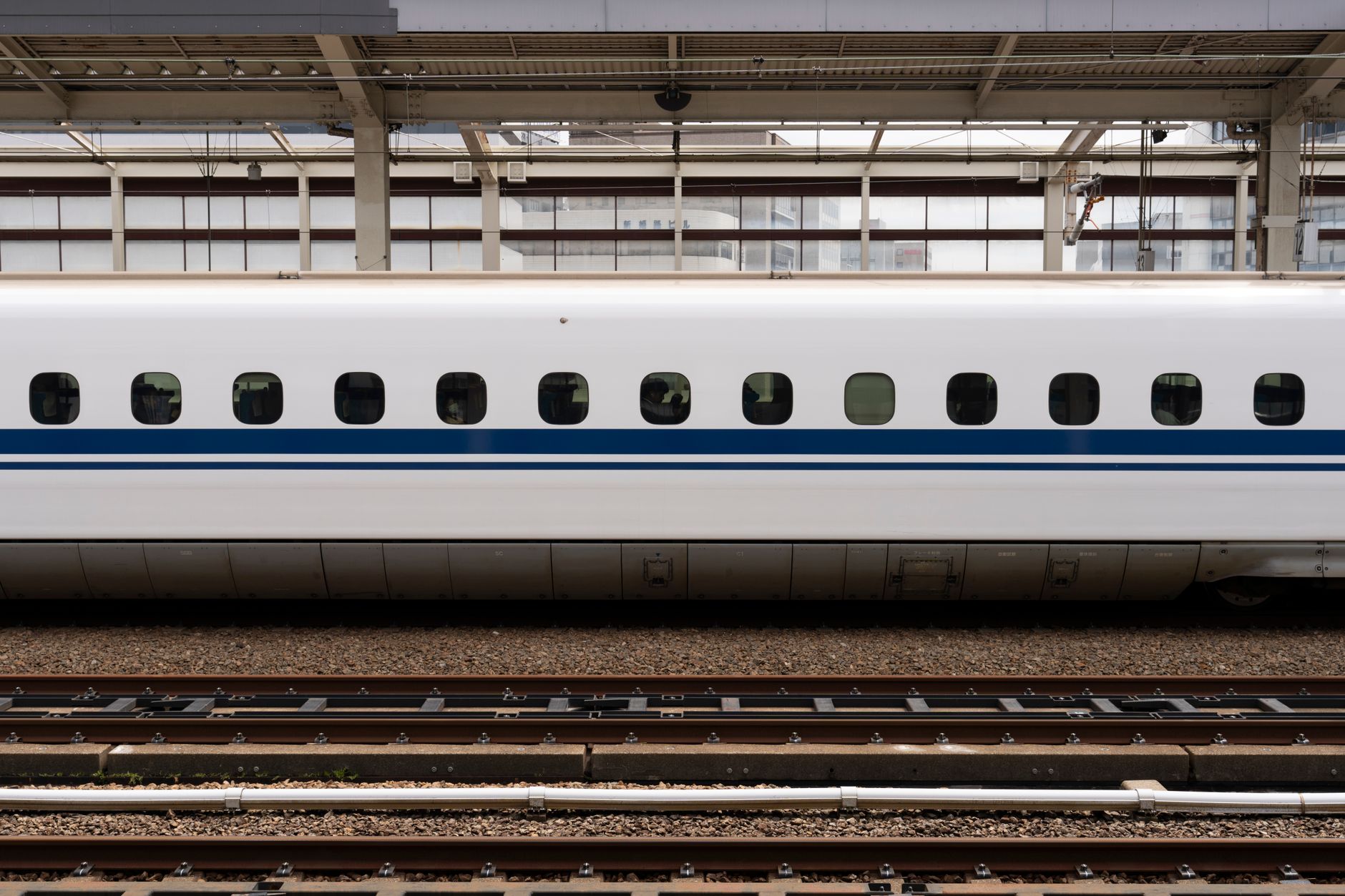
Shin-Osaka Station: Your Shinkansen Gateway
Shin-Osaka exists because of the Shinkansen. It is where the Tokaido line from Tokyo meets the Sanyo line continuing west to Hiroshima, Fukuoka and Kyushu, and it is the only station in the city where those trains stop.
What it is not is a destination. The area around the station is offices, business hotels and chain restaurants. There is no nightlife district, no market, no river walk. The station building itself is well supplied — bento shops, standing noodle counters, souvenir floors — but once you step outside there is little reason to linger.
That said, it earns its keep in specific situations: an early departure west, a late arrival from Tokyo, a one-night stop between two longer legs, or a trip where you are carrying a lot of luggage and want zero transfers on either end.
Best for: short stopovers, early or late Shinkansen departures, onward travel to Hiroshima or Kyushu, travellers prioritising schedule over scenery.
Which Station Should You Choose?
Not "which neighbourhood is nicest" — which station solves your particular problem.
Choose Namba if…
- Dotonbori, Shinsaibashi and Kuromon Market are on your list
- You want to eat and drink within walking distance of your room
- You are flying in or out of Kansai International Airport on the Nankai Line
- You are heading south — to Koyasan, Wakayama or Nara via Kintetsu
- Evening atmosphere matters more to you than a quiet night's sleep
Choose Umeda / Osaka Station if…
- Your itinerary includes Kyoto, Kobe, Nara or Himeji as day trips
- You are travelling on JR lines and want them under your hotel
- You prefer department stores, coffee and quieter evenings
- You are here for business north of the river
- You want the widest choice of international hotel brands
Choose Shin-Osaka if…
- You are in Osaka for one or two nights, between Shinkansen rides
- You have an early departure toward Hiroshima, Okayama or Fukuoka
- You are travelling with heavy luggage and want no transfers
- Your priority is the timetable, not the city
A useful rule of thumb: if you can name three things you want to do in Osaka, stay in Namba or Umeda. If you cannot, you are probably passing through — and Shin-Osaka is fine.
Where to Stay: Recommended Hotels by Area
The properties below are established, well-known hotels in each district, chosen to cover different traveller types rather than to rank them. Price bands are indicative ranges for a standard double room on a non-peak weekday, as observed in September 2026 — they are not quoted rates. Osaka pricing swings hard around cherry blossom season, Golden Week, Obon, autumn foliage and major events, and a room that is ¥25,000 in November can be double that in early April.
Namba
| Hotel | Area | Best for | Why stay here | Indicative price band | Booking link |
|---|---|---|---|---|---|
| Cross Hotel Osaka | Shinsaibashi, between Dotonbori and the arcade | Couples and food-led trips | Walking distance to Dotonbori in one direction and the Shinsaibashi arcade in the other; design-led rooms | Upper-mid (≈¥25,000–45,000) | Booking link — coming soon |
| Swissôtel Nankai Osaka | Directly above Nankai Namba Station | Kansai Airport arrivals, families | Sits on top of the airport line terminal, so you roll your bags from the train to the lift | Upscale (≈¥30,000–60,000) | Booking link — coming soon |
Umeda / Osaka Station
| Hotel | Area | Best for | Why stay here | Indicative price band | Booking link |
|---|---|---|---|---|---|
| Hilton Osaka | Facing Osaka Station, south side | Business travellers, day-trippers | Covered access to JR Osaka Station and the Metro; reliable international-standard rooms | Upscale (≈¥35,000–70,000) | Booking link — coming soon |
| InterContinental Osaka | Grand Front Osaka complex, north of the station | Longer stays, special occasions | Built into the Grand Front development with direct station access and city views | Luxury (≈¥50,000–90,000) | Booking link — coming soon |
Shin-Osaka
| Hotel | Area | Best for | Why stay here | Indicative price band | Booking link |
|---|---|---|---|---|---|
| Hotel Mielparque Osaka | A short walk from Shin-Osaka Station | Budget-conscious stopovers | Straightforward, well-located rooms at a lower price than the central districts | Mid (≈¥12,000–25,000) | Booking link — coming soon |
| Shin-Osaka Station Hotel | Adjacent to the station building | Early Shinkansen departures | About as close to the platforms as it is possible to sleep | Budget–mid (≈¥10,000–20,000) | Booking link — coming soon |
Whichever area you pick, book earlier than you think you need to. Osaka runs close to full during the spring and autumn peaks, and the gap between booking three months out and three weeks out is often larger than the gap between two hotel categories.
Buying Shinkansen Tickets and Getting Around
Booking online before you arrive
The official online channel for the Tokaido, Sanyo and Kyushu Shinkansen is smartEX. It covers exactly the line you need for Tokyo–Shin-Osaka, takes reservations for one to six people, and opens bookings from 5:30 am one year before the travel date, right up to four minutes before departure. You can register a Japanese IC card — Suica, ICOCA, PASMO and the rest of the interoperable family — and tap straight through the Shinkansen gate, or use a QR code instead of a paper ticket.
One detail that catches people out: when you board with a registered IC card, the Shinkansen fare is charged to the credit card on your smartEX account, not deducted from the IC card balance. The IC card is acting as your ticket, not as your wallet.
There is also EX Reservation (EX予約), a membership service aimed mainly at frequent domestic travellers. For a single round trip as a visitor, smartEX is the simpler option.
Buying at the station
If you would rather buy in person, every Shinkansen station has multilingual ticket machines and a staffed ticket office. Give yourself more time than you think at Tokyo Station in particular — it is large, and the Shinkansen gates are not where a first-time visitor expects them to be.
Reserved vs non-reserved seats
A Shinkansen ticket is two things stacked together: a basic fare (getting from A to B) and a limited express charge (using the fast train). Reserved and non-reserved seats differ only in the second part — roughly ¥850 on the Tokyo–Shin-Osaka run.
- Non-reserved (jiyūseki): board any Nozomi and sit in a non-reserved car. Cheaper and flexible, but on a busy departure you may stand for two and a half hours.
- Reserved (shiteiseki): a specific seat on a specific train. Worth the difference on this route, and essential if you have luggage or are travelling as a group.
- Green Car: first class, wider seats, roughly ¥5,700 above a standard reserved seat.
Two rules that change during holidays. First, all seats on Nozomi trains become reserved during the three major peak periods — Golden Week, Obon, and the year-end and New Year holidays. JR Central publishes the exact dates each year; during those windows a non-reserved ticket does not get you a seat, only the right to stand outside the Green Cars. Second, if you are travelling on a Japan Rail Pass, Nozomi is not included in the base pass — you need to buy a supplement, or take a Hikari instead and add roughly twenty minutes to the journey.
IC cards once you are in Osaka
For everything after the Shinkansen — the Midosuji Line, the JR Kyoto Line, buses — a prepaid IC card is the simplest option. ICOCA is the JR West card issued in the Kansai region, and Suica, PASMO and the other major cards work interchangeably on almost all trains, subways and buses in the city. Tap in, tap out, and top up at any station machine.
If you plan to visit all three districts in a day, look at the Osaka Metro day passes — moving Shin-Osaka → Umeda → Namba and back on single fares adds up faster than it looks.
Planning Your Osaka Trip with GMS Travel Support
Choosing between Namba, Umeda and Shin-Osaka is usually the easy part. Sequencing an entire Japan trip — which city to base in, how many nights, where the Shinkansen legs fall, whether a rail pass is worth it for your route — is where most itineraries go wrong.
- OneTap Guide — an AI travel concierge for exploring Japanese cities, including Osaka's neighbourhoods.
- OneTap AI Planner — build a day-by-day plan for a single day or a full trip.
- Contact GMS — ask a question about your Japan itinerary and get a considered answer.
Risks and Limitations
Every option here has a downside worth knowing before you book:
- Namba is crowded and loud, especially on weekend nights. If you are a light sleeper or travelling with small children, ask for a room away from the canal side.
- Umeda is polished but can feel corporate, and the underground station complex is genuinely confusing on a first visit. Allow extra time for transfers.
- Shin-Osaka is the most convenient and the least interesting. Staying there for more than two nights usually means commuting into the city you came to see.
- All fares and times above can change. The figures here were checked in September 2026; JR adjusted fares in March 2026 and may do so again. Confirm with the operator before you travel.
Frequently Asked Questions
Which area is best for first-time visitors?
Namba, for most people. It puts Dotonbori, Shinsaibashi and Kuromon Market within walking distance, has a direct line to Kansai International Airport, and connects north to Umeda and Shin-Osaka on a single subway line. Umeda is the better choice if your trip leans on day trips to Kyoto, Nara or Kobe.
Does the Shinkansen from Tokyo stop at Osaka Station?
No. Tokaido Shinkansen services terminate at Shin-Osaka, which is a separate station about 3.8 km north of Osaka Station. Getting to Osaka Station means one more short ride — roughly four minutes on the JR Kyoto Line.
How long does it take to get from Shin-Osaka to Namba?
About 16 minutes on the Osaka Metro Midosuji Line, with no change of train, for ¥290. It is the simplest transfer in the city if you are carrying luggage.
Is it easy to travel between these three areas?
Yes — all three sit on the Midosuji Line, and the whole span from Shin-Osaka to Namba takes under twenty minutes. Journeys between them cost ¥240–¥290 on a single fare, so a day pass is worth checking if you plan several hops.
Should I buy a reserved seat on the Shinkansen?
On the Tokyo–Osaka run, usually yes. The difference is only around ¥850, and it guarantees a seat with luggage space on a route that fills up. During Golden Week, Obon and the New Year holidays the question does not arise — all Nozomi seats are reserved during those periods.
Can I find international food in these areas?
All three have it, in different registers. Namba's international restaurants skew casual and tourist-facing; Umeda has the widest range of upscale international dining; Shin-Osaka's options are concentrated in and around the station and lean toward quick, convenient meals.
Conclusion
Your choice comes down to what the trip is for. If you are here to eat, wander and stay out late, base yourself in Namba. If you want a comfortable hub with the JR network underneath you and Kansai day trips on the menu, choose Umeda. If Osaka is one stop on a longer Japanese journey and the timetable is what matters, Shin-Osaka does exactly one job and does it very well.
Whichever you pick, the three are close enough that no choice is a disaster — you are never more than about twenty minutes and ¥290 from the other two. Book earlier than feels necessary, check current fares and rates before you commit, and give yourself a buffer at Tokyo Station on the way out.


